
With the Law Commission’s consultation on the future of commercial leasehold law closing on 16 September, the PLA recently brought practitioners together with the Law Commission to discuss the proposals and, importantly, how they might work in practice.
The discussion highlighted a number of areas where practitioners see scope for change - from Ground F and contracting out to Section 28, dispute resolution and the role of mediation.
Is Ground F still fit for purpose?
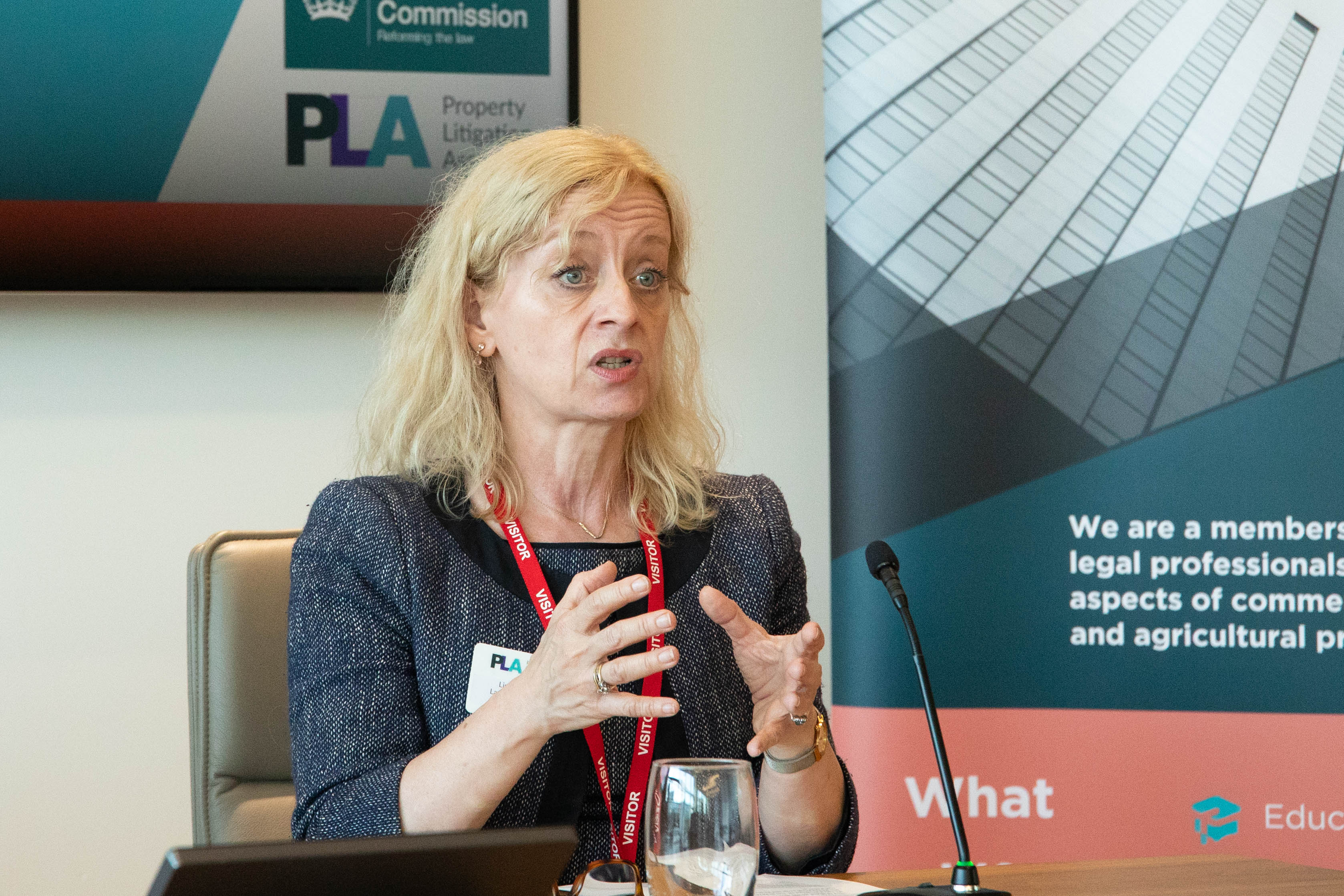
Ground F was a particular focus of discussion.
Practitioners questioned whether the current test has become too technical and artificial, with parties sometimes structuring development proposals around the requirements of the legislation rather than their underlying commercial objectives.
There was support for considering a broader “substantial works” test that could better accommodate modern development, refurbishment and retrofitting.
Questions were also raised about how Ground F should operate where the landlord is not carrying out the works itself - for example, where a purchaser or another party will undertake the development - and how the test should apply to internal-only demises.
The overarching message was that Ground F needs to work for the way development is actually undertaken today, without encouraging artificial structuring.

Can contracting out be simplified?
There was also considerable discussion around the practical operation of contracting out. The Commission is considering replacing the current warning notice and declaration process with provisions incorporated directly into the lease. Practitioners supported the principle of simplification.
Specifically, with regard to surrenders, the existing distinction between contracting out being required for agreements to surrender but not for actual surrenders appears difficult to justify in practice.
Questions were also raised around agreements for lease, including what happens when the parties or ownership change before completion and whether the current framework adequately reflects the reality of property transactions.
The challenge will be to simplify the process while maintaining appropriate safeguards for tenants.
What should happen to Section 28?
Section 28 generated a particularly interesting practical discussion.
One concern raised was the situation where an agreement for lease results in a tenant losing protection of the Act, but the new lease is ultimately never granted because the relevant conditions are not met.
This raises a fundamental question: what purpose does Section 28 now serve, and is it still necessary?

Are County Courts the right forum?
The current system for dealing with lease renewal disputes was another area where practitioners questioned whether change is needed.
There was support for considering a different allocation of cases between the County Court, High Court and First-Tier Tribunal.
Some participants suggested that highly contested renewals may be better suited to the High Court, given their complexity and underlying value, while less contentious matters could potentially be dealt with by the Tribunal.
However, there was also a clear warning: moving cases to the Tribunal will not solve the problem unless it has the specialist resources and administrative capacity to deal with the additional workload.
For practitioners, certainty and timeliness are critical. A reliable timetable for resolving disputes could be as important as the question of which forum ultimately has jurisdiction.
Could mediation play a greater role?
The discussion around alternative dispute resolution also produced some strong practitioner views.
While the consultation considers the potential role of non-determinative ADR, including early neutral evaluation, participants questioned whether ENE is necessarily the best fit for lease renewal disputes.
There was a strong case made for mediation, based on practitioners' experience of resolving both opposed and unopposed renewals.
One concern was that ENE could become something of a “mini-trial”, with parties still doing experts’ reports, and incurring extra preparation and costs. Mediation, by contrast, may offer a more flexible way of helping parties reach a commercial settlement that deals with wider issues that are often involved
There wasn’t universal enthusiasm for mandatory mediation, but there was support for exploring ways to encourage - or potentially require - parties to engage with ADR before disputes reach court.
What happens next?
Following a survey of its members the PLA submitted a full response to both consultations (view the responses here) and will continue to engage with the Law Commission as it considers the responses and develops its recommendations.